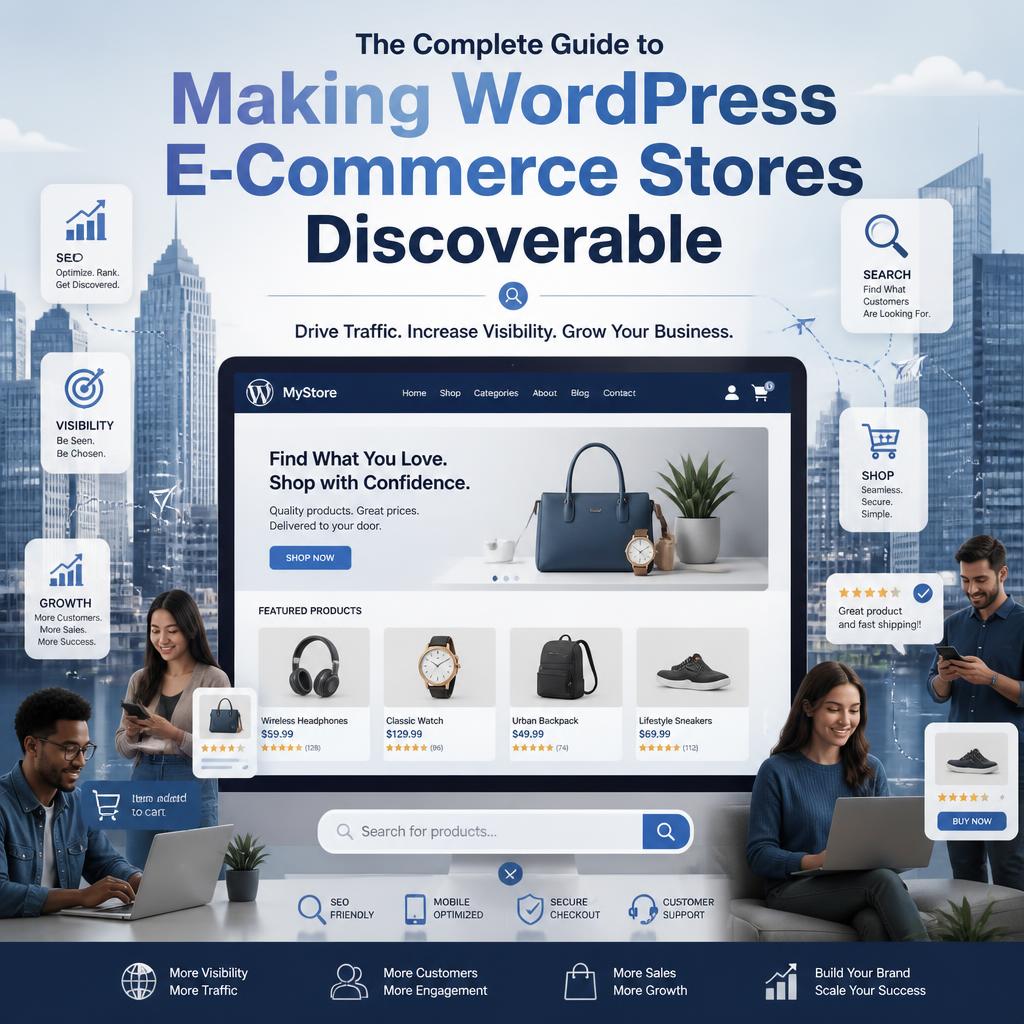
Building an online store is easy. Getting people to actually find it is the real challenge.
Thousands of WordPress-based e-commerce stores launch every day, but only a small percentage ever gain consistent organic traffic. The difference isn’t always product quality or pricing—it’s discoverability. If search engines and users can’t easily find your store, sales stay unpredictable and heavily dependent on ads or social media.
1. Understanding What “Discoverable” Really Means
Discoverability is not just about ranking on Google. It’s a combination of three things:
- Indexability: Can search engines properly crawl and understand your site?
- Visibility: Do your pages appear for relevant searches?
- Clickability: Do users actually choose your result over competitors?
A store can be indexed but still invisible if it lacks keyword targeting, structure, or compelling snippets. The goal is to optimize all three layers.
2. Start With a Search-Friendly Site Structure
Most WordPress e-commerce stores fail at the foundation: structure.
A clean architecture helps search engines understand relationships between pages and improves user navigation.
Recommended structure:
- Homepage
- Category pages
- Sub-category pages (if needed)
- Product pages
- Blog / guides section
Key principles:
- Keep important pages within 3 clicks from the homepage
- Avoid deep nesting (e.g., /category/subcategory/subsubcategory/product)
- Use clear, descriptive URLs like:
- /mens-shoes/running-shoes/
- /organic-skincare/face-serum/
A logical structure doesn’t just help SEO—it also improves conversion rates because users find products faster.
3. Optimize Category Pages First (Not Just Products)
Many store owners focus only on product pages, but category pages often have higher ranking potential.
Category pages target broader keywords like:
- “running shoes for men”
- “organic skincare products”
- “wireless earbuds under budget”
How to optimize category pages:
- Add a unique, keyword-focused description (150–300 words minimum)
- Include internal links to top products
- Use clear H1 and supporting headings
- Add FAQs targeting long-tail searches
- Include filtered navigation for user experience
Think of category pages as mini landing pages—not just product grids.
4. Product Pages That Actually Rank
A product page is more than a digital shelf. It’s a searchable asset.
Essential elements of a high-performing product page:
1. Unique product descriptions
Avoid manufacturer copy. Search engines penalize duplicate content, and users don’t engage with generic text.
Write descriptions that include:
- Benefits (not just features)
- Use cases
- Problem-solving value
- Natural keyword usage
2. Structured headings
Break content into readable sections:
- Overview
- Key features
- Specifications
- How to use
- FAQs
3. Image optimization
- Use descriptive file names
- Add alt text that describes the product naturally
- Compress images for speed
4. Reviews and ratings
User-generated content increases trust and improves SEO signals.
5. Technical SEO Foundations (The Silent Ranking Factor)
Even great content won’t rank if your technical setup is weak.
Core technical areas to fix:
Site speed
Slow stores lose both rankings and customers. Optimize by:
- Using caching plugins
- Compressing images
- Using lightweight themes
- Minimizing unnecessary plugins
Mobile optimization
Most e-commerce traffic is mobile. Your store must:
- Load quickly on mobile networks
- Have tappable buttons
- Avoid layout shifts
Crawlability
Ensure:
- XML sitemap is enabled
- Robots.txt is not blocking key pages
- No broken links exist
Structured data
Add schema markup for:
- Products
- Reviews
- Pricing
- Availability
This helps search engines understand your content and improves rich results in search.
6. Keyword Strategy That Matches Buyer Intent
Not all keywords are equal. In e-commerce, intent matters more than volume.
Types of keywords:
Informational:
- “how to choose running shoes”
- “best skincare routine for oily skin”
Commercial:
- “best running shoes under 5000”
- “top organic face serums”
Transactional:
- “buy Nike running shoes online”
- “order vitamin C serum India”
Strategy:
- Use informational keywords in blog content
- Use commercial keywords in category pages
- Use transactional keywords in product pages
This layered approach captures users at every stage of the buying journey.
7. Content Marketing That Drives Store Traffic
A WordPress store without content is like a shop without signage.
What to publish:
Buying guides
Help users make decisions:
- “How to Choose the Right Laptop Backpack”
- “Complete Guide to Natural Skincare Ingredients”
Comparison posts
- “Product A vs Product B”
- “Top 10 budget-friendly alternatives”
Problem-solving articles
- “How to Fix Dry Skin in Winter”
- “Best Shoes for Long Standing Hours”
These posts attract organic traffic and funnel users into product pages.
Internal linking strategy:
Every blog post should link to:
- Relevant product pages
- Category pages
- Related guides
This builds authority and improves rankings across your entire store.
8. On-Page SEO That Actually Works
On-page SEO is where most stores either succeed or fail.
Key elements:
- Title tags with primary keywords (natural, not stuffed)
- Meta descriptions that encourage clicks
- Clean headings (H1, H2, H3 hierarchy)
- Internal links to relevant pages
- External links to authoritative sources (when needed)
Example:
Instead of:
“Buy Cheap Shoes Online”
Use:
“Affordable Running Shoes Designed for Daily Comfort and Performance”
It’s more natural, more clickable, and more trustworthy.
9. Build Authority Through Backlinks
Search engines trust websites that others reference.
Ways to earn backlinks:
- Guest blogging on niche websites
- Collaborating with influencers
- Getting featured in product roundups
- Creating shareable content (guides, statistics, tools)
Avoid spammy link-building tactics. Quality matters more than quantity.
One strong backlink from a relevant site is worth more than dozens of low-quality ones.
10. Improve User Experience (UX) for SEO Gains
Search engines track user behavior signals like:
- Time on site
- Bounce rate
- Pages per session
If users leave quickly, rankings drop.
Improve UX by:
- Simplifying navigation
- Adding search filters (size, price, category)
- Showing related products
- Reducing clutter on product pages
- Improving checkout flow
A smoother experience leads to better engagement and higher conversions.
11. Optimize for Local and Niche Searches
If your store targets a specific region or niche, lean into it.
Examples:
- “organic skincare in India”
- “handmade jewelry shipping nationwide”
- “eco-friendly home products”
Add:
- Location-based landing pages
- Local keywords in content
- Region-specific FAQs
This helps you compete in less saturated search segments.
12. Leverage Email and Repeat Traffic Signals
While not directly SEO, repeat traffic strengthens your overall visibility.
Strategies:
- Offer discounts for newsletter signups
- Send abandoned cart emails
- Share new blog posts and products
- Segment users based on interests
Returning users signal brand trust, which indirectly supports organic performance.
13. Track, Measure, and Improve Continuously
SEO is not a one-time setup. It’s an ongoing process.
Track:
- Organic traffic growth
- Keyword rankings
- Conversion rate
- Bounce rate
- Top-performing pages
Tools:
- Google Search Console
- Google Analytics
- Rank tracking tools
Improve based on data:
If a page gets traffic but no sales, improve:
- Copy
- CTA placement
- Product images
- Trust signals
Final Thoughts
Making a WordPress e-commerce store discoverable is not about one trick or plugin. It’s about building a complete system where structure, content, technical performance, and user experience work together.
Most stores fail because they treat SEO as an afterthought. Successful stores treat it as part of the foundation.
If you focus on:
- Clean architecture
- Intent-based keywords
- High-quality content
- Technical optimization
- Consistent improvement
Your store won’t just exist online—it will actually be found.
And in e-commerce, being found is the first real step toward being successful.