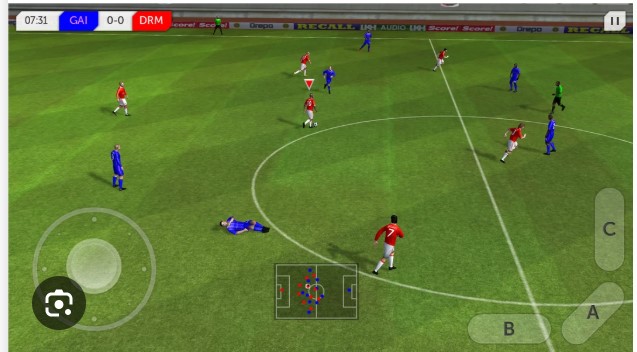
Before the high-definition stadiums, before the live online leagues, and before the complex customizations of Dream League Soccer 2026, there was a simpler time. A time when the game was smaller in size but massive in heart. That era is now fondly remembered as the DLS Classic period. For long-time fans, the classic versions of Dream League Soccer represent the golden age of mobile football—a time when gameplay was king and the pursuit of building a dream team was purely about playing matches, not microtransactions.
What is DLS Classic?
When players refer to DLS Classic, they are generally talking about the earlier installments of the Dream League Soccer franchise, specifically the titles released between 2011 and 2016. Versions like Dream League Soccer 2013, 2014, and 2015 hold a special place in the hearts of millions. These were the games that put First Touch Games on the map.
Unlike the modern versions which are packed with complex management systems and online multiplayer, DLS Classic was defined by its pick-up-and-play simplicity. The menus were straightforward. The transfer market was simple. You earned coins, you bought players, and you played matches. That was it. For many fans, this simplicity was not a limitation but a strength.
The Gameplay That Hooked a Generation
The gameplay mechanics of the DLS Classic era are often cited as the reason the franchise became so popular. While modern DLS 26 has sophisticated animations and physics, the classic games had a crisp, responsive arcade feel that was incredibly addictive.
Matches were fast. You could complete a full game in five to six minutes, making it perfect for bus rides, lunch breaks, or waiting in line. The controls were intuitive—a floating joystick for movement and three buttons for pass, shoot, and sprint. There was no learning curve. You could hand the phone to a friend who had never played before, and they would be scoring goals within sixty seconds.
The AI in DLS Classic was challenging but fair. The difficulty curve was perfectly balanced. You started in the amateur division against weak opponents, and as you won trophies, the teams got harder. By the time you reached the elite division, every match was a battle. This progression system kept players engaged for months.
The Iconic Graphics and Presentation
By today’s standards, the graphics of DLS Classic are primitive. The player models were blocky. The stadiums were flat textures. The crowds were static cardboard cutouts. But at the time, these games looked amazing on small smartphone screens. The colors were bright. The animations were smooth. The frame rate rarely dropped.
The presentation had a charm that modern versions have lost. The menu music was catchy and upbeat. The goal celebration cutscenes were short but satisfying. When you won a trophy, the game gave you a genuine sense of achievement. These small touches made DLS Classic feel like a labor of love rather than a commercial product.
The Transfer Market Simplicity
One of the most beloved features of DLS Classic was the transfer market. Unlike modern versions where you have to negotiate contracts, manage wage budgets, and compete with other clubs, the classic games kept things simple.
You earned coins by playing matches and winning competitions. You took those coins to the transfer market. There, you could buy any player you could afford. Want to sign Cristiano Ronaldo? Save up your coins and buy him. Want to build an entire team of bronze players and develop them? You could do that too.
The player ratings were straightforward. A player had a single overall rating from 1 to 100. There were no complex attribute breakdowns. A 90-rated striker would score goals. An 85-rated defender would stop them. This simplicity allowed players to focus on the action rather than spreadsheets.
The Legendary Soundtrack
Ask any long-time fan what they remember most about DLS Classic, and many will mention the music. The early Dream League Soccer games featured an incredible indie rock and electronic soundtrack. Songs like “High Hopes” by Kodaline or “Paddling Out” by Miike Snow became synonymous with the franchise.
The music played in the menus, creating a relaxed, almost nostalgic atmosphere while you tweaked your lineup or browsed the transfer market. When modern versions replaced these tracks with generic background music, fans were devastated. Today, fan-made compilations of the DLS Classic soundtrack circulate on social media, proof of how deeply those songs resonated.
The Limited Customization
Compared to DLS 26, the customization options in DLS Classic were laughably limited. You could choose your team name. You could pick your kit from a handful of preset colors. You could select a basic logo from a small library. That was about it.
But there was beauty in these limitations. You did not spend hours agonizing over collar styles or away sock patterns. You picked a color, picked a logo, and got back to playing football. The focus remained on the pitch, not the dressing room.
Why Players Still Return to DLS Classic
Despite the availability of newer, shinier versions, a dedicated community still plays DLS Classic today. Through the magic of older devices and APK archives, fans continue to enjoy these vintage titles.
The reasons are varied. Some players prefer the simpler gameplay. Others cannot stand the microtransactions and energy systems of modern free-to-play games. Many just want to relive the nostalgia of their teenage years, when they would sit in their bedrooms, headphones on, grinding for coins to buy that 95-rated striker.
For these fans, DLS Classic is not just a game. It is a time machine. It takes them back to a period when mobile gaming was still innocent, when you paid a few dollars for a complete experience, and when “free-to-play” did not mean “pay-to-win.”
The Evolution to Modern DLS
The transition from DLS Classic to the modern era was gradual. With the release of Dream League Soccer 2017, First Touch Games introduced the current engine. Graphics improved dramatically. Online multiplayer arrived. Customization exploded in scope.
But something was lost in translation. The simplicity vanished. Menus became crowded. The game introduced energy systems that limited how many matches you could play. Coins became harder to earn, pushing players toward microtransactions. The pure, unadulterated joy of the DLS Classic era faded.
The Legacy of DLS Classic
The influence of DLS Classic on mobile gaming cannot be overstated. It proved that a sports game could work on a touchscreen. It demonstrated that a small developer could compete with giants like EA Sports. It created a template that dozens of other football games would copy.
More importantly, DLS Classic created a community. Forums, Facebook groups, and YouTube channels dedicated to the game thrived. Fans shared tips, celebrated promotions, and commiserated over relegations. That community remains the backbone of the Dream League Soccer franchise today.
Final Thoughts
DLS Classic represents a simpler, perhaps purer, era of mobile football gaming. It was a time when the goal was not to sell you player packs or battle passes, but simply to provide a fun, addictive, and rewarding experience. For those who were there, the memories remain vivid. The late-night matches. The last-minute winners. The joy of finally affording that superstar player.
Modern DLS 26 is an impressive achievement. But for many, the heart of the franchise will always belong to the classics. The blocky graphics, the catchy music, the simple menus—these are the elements that built a legacy. And as long as there are fans willing to install older APKs or dig out ancient phones, the spirit of DLS Classic will never die.